Your AI Tools Aren't the Problem. Your Operating Model Is
Companies are not struggling with AI because the technology is flawed. They're struggling because they keep framing it as a technology problem when it's really an organizational one.

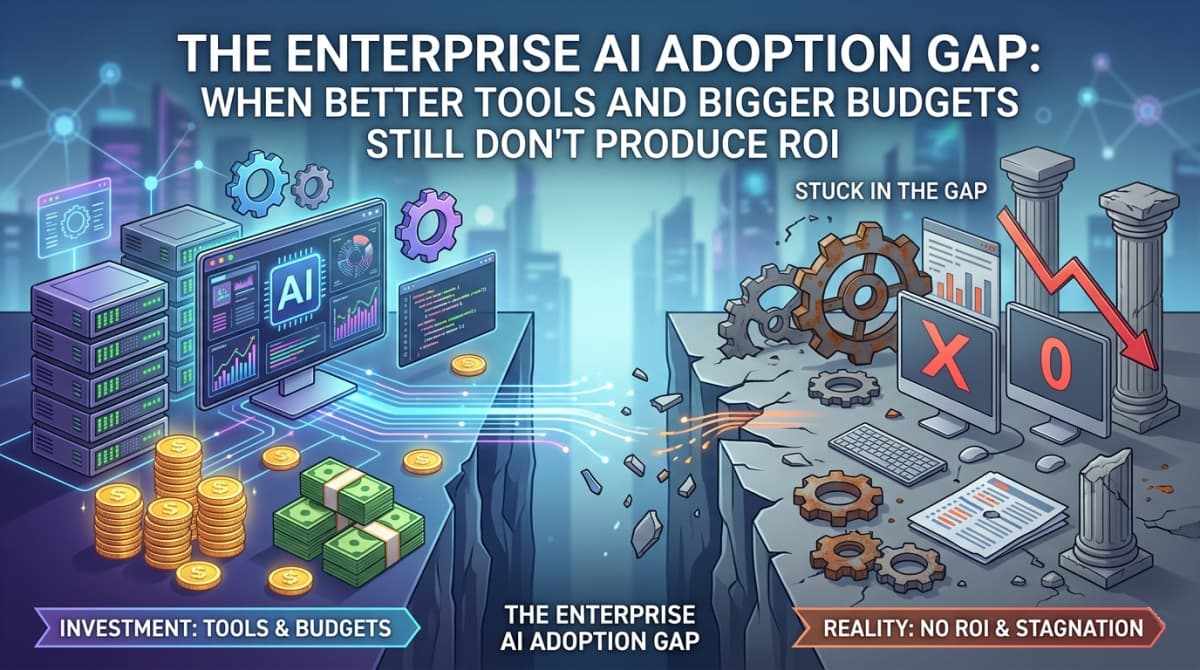
Companies are not struggling with AI because the technology is flawed. They're struggling because they keep framing it as a technology problem when it's really an organizational one.
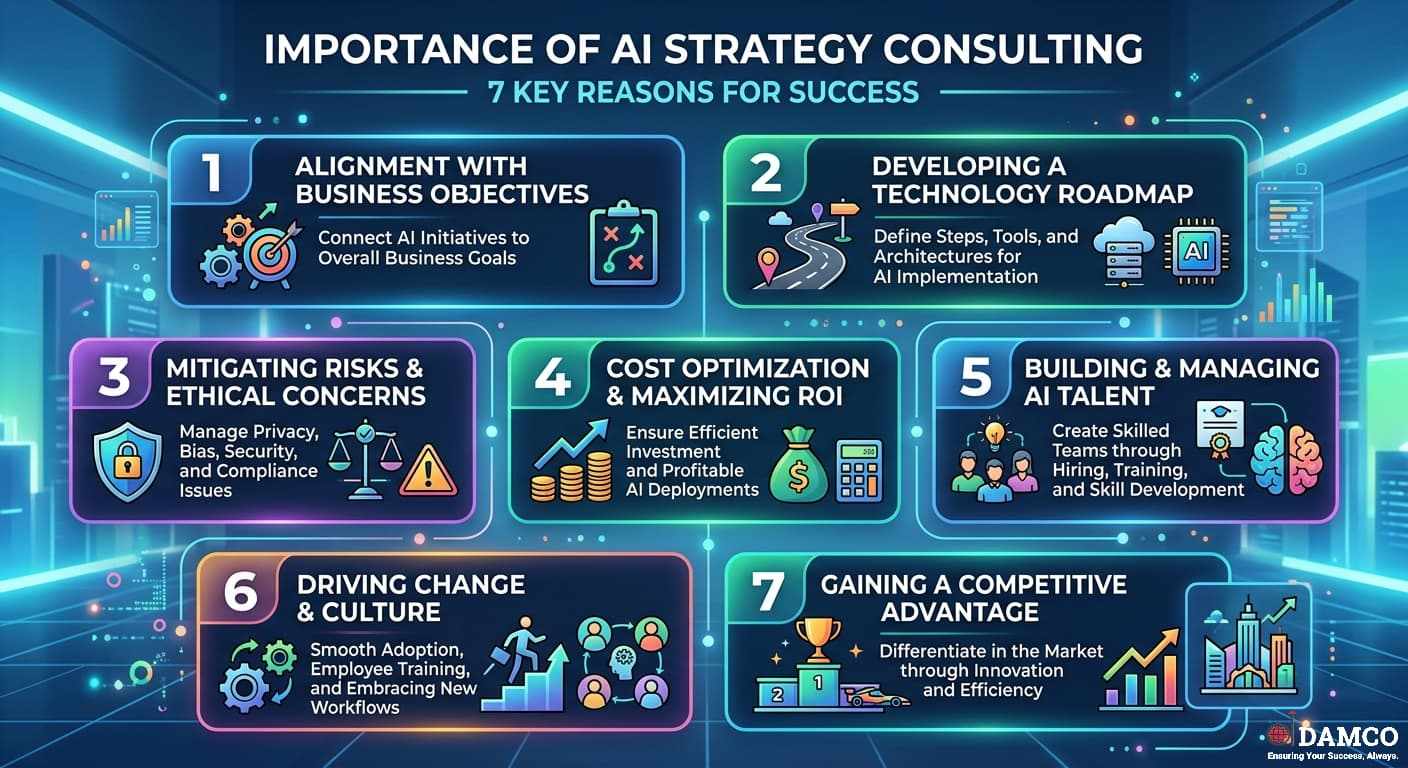
In 2026, the gap between businesses that simply "use AI" and those that lead their industries is defined by a single factor: a cohesive strategy. While many organizations rush to implement large language models or automated agents, true enterprise scale requires more than just high-performance tools. It demands a structured alignment with business objectives and a clear technology roadmap.

As digital threats evolve, traditional rule-based security is no longer enough to protect the bottom line. This visual deep-dive explores the fundamental shift from reactive to proactive defense. Discover how AI and Machine Learning are revolutionizing fraud detection through real-time anomaly recognition, enhanced pattern analysis, and the massive reduction of false positives. Learn why moving toward an AI-driven security posture is no longer a luxury, but a strategic necessity for maintaining consumer trust in a high-risk digital economy.
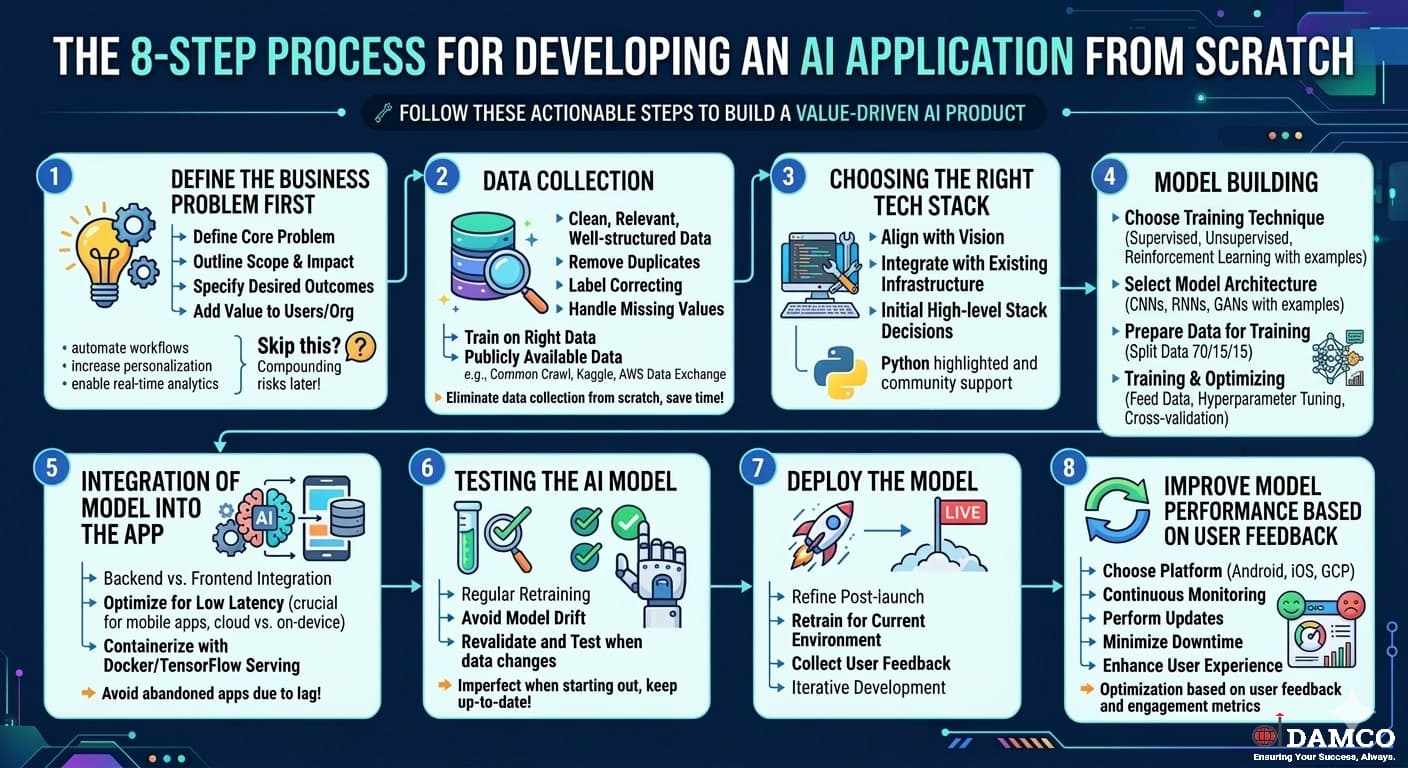
Building an AI application is often seen as a black box of complex code and mysterious algorithms. However, the difference between a failed experiment and a scalable product usually comes down to the process. This infographic breaks down the essential 8-step lifecycle for custom AI Application development, starting from the initial business problem to data collection, tech stack selection, and iterative model improvement. Whether you are a founder looking to outsource development or a project manager keeping a team on track, this guide provides a clear blueprint for navigating the software development lifecycle. Learn how to handle data prep, avoid model drift, and ensure your AI provides actual value to the end user.
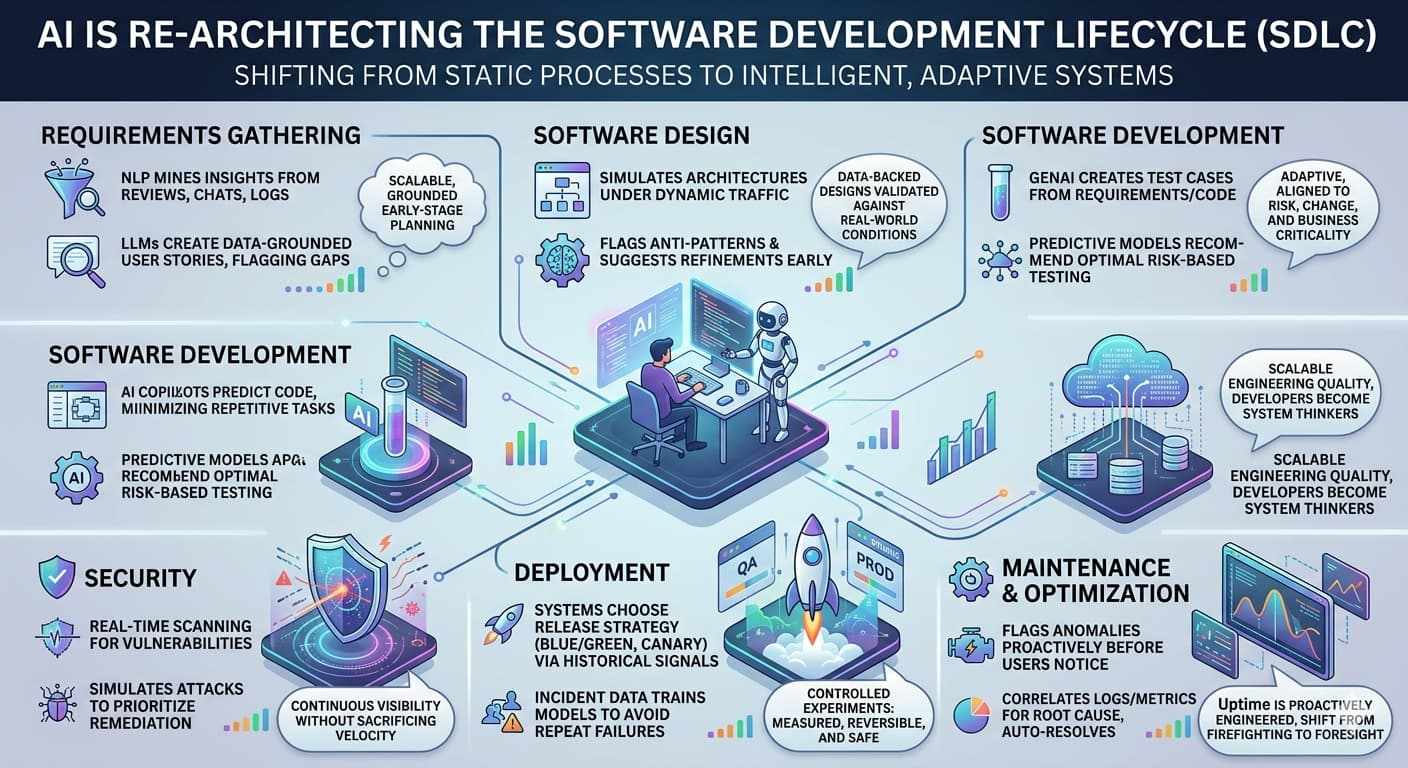
As software complexity grows, traditional SDLC models often struggle to keep up. This infographic explores how Artificial Intelligence is transforming the Software Development Lifecycle (SDLC) by introducing adaptive logic at every phase.
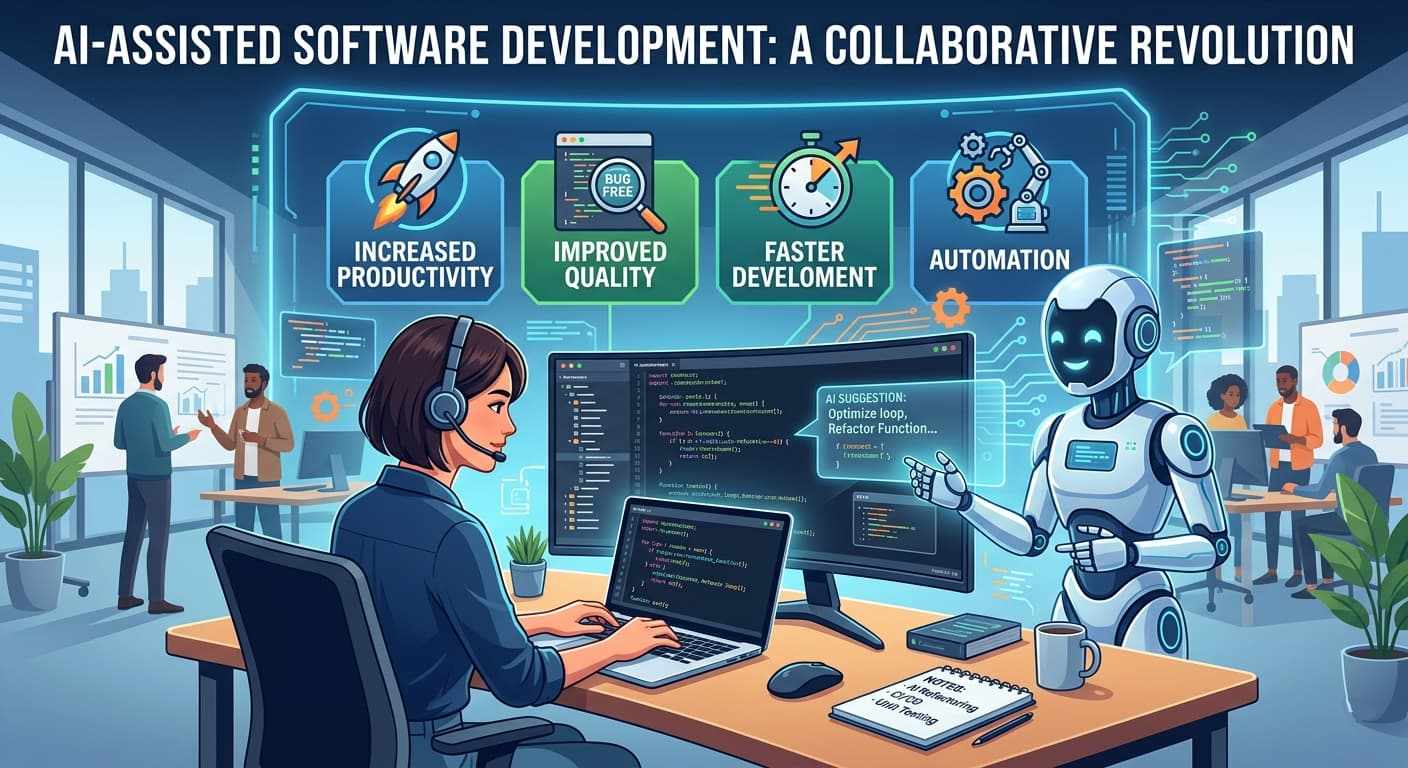
Most developers have experimented with AI tools like GitHub Copilot or ChatGPT for writing code or catching bugs. But enterprise-wide adoption across the full software development lifecycle is still far from the norm. High upfront costs, murky ROI, integration complexity, and genuine concerns about AI-generated code quality are keeping many organizations on the fence.
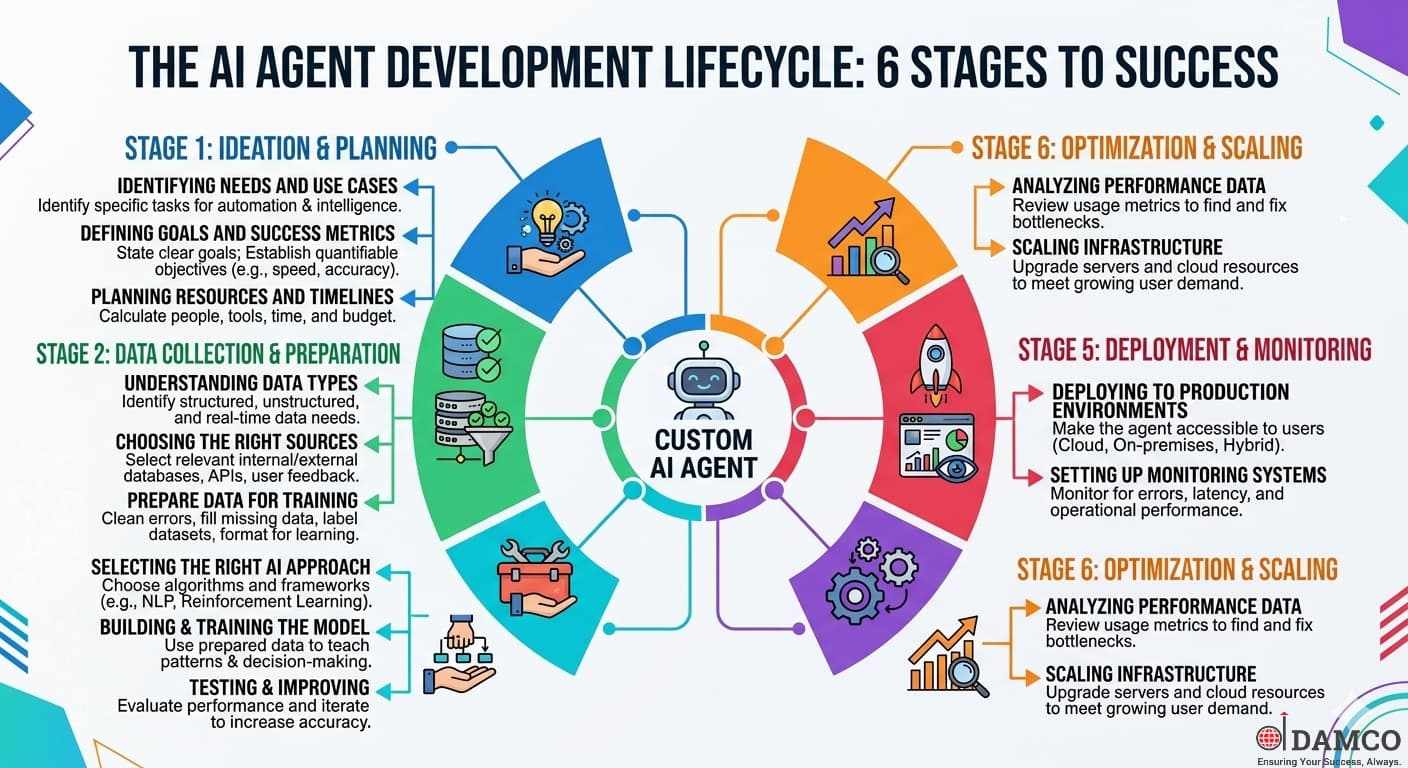
Building an AI agent is easy. Building one that doesn't break in production? That’s the real challenge.

Artificial intelligence promises to transform industries - but for most organizations, the transformation stalls before it begins. With over 80% of AI initiatives failing to reach production, the question isn't whether to invest in AI, but how to execute it right.

As enterprises race to deploy AI, security and compliance can no longer be afterthoughts. AI systems face unique threats such as training data poisoning, model inversion, evasion attacks, and supply chain vulnerabilities, which demand proactive, lifecycle-wide protection.

Traditional customer support is hitting a wall: costs are rising, agent turnover is high, and customers expect 24/7 responses. Our latest blog explains how AI-Powered Chatbots solve this by acting as a "digital front door."
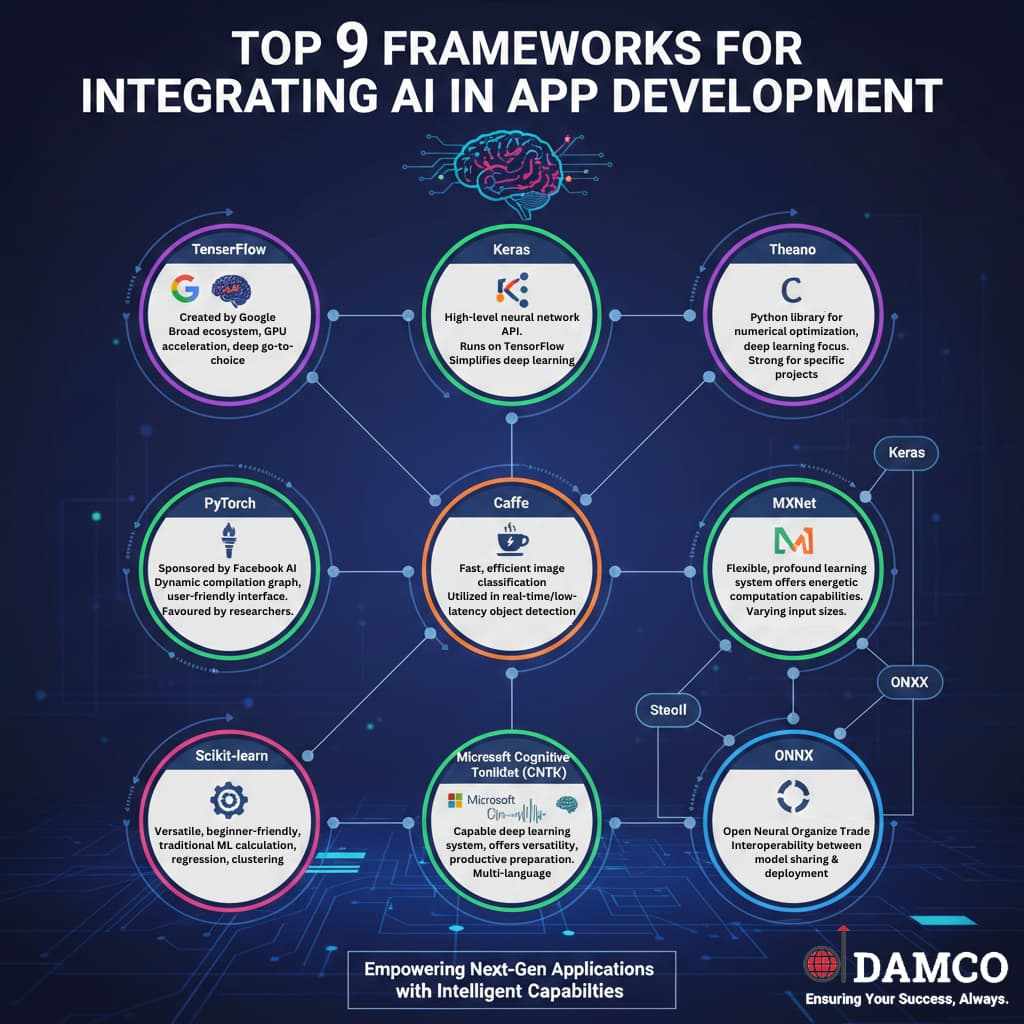
Choosing the right AI framework is the difference between a prototype that stays on your laptop and a product that scales to millions. Whether you need the massive ecosystem of TensorFlow, the researcher-friendly flexibility of PyTorch, or the lightning-fast image processing of Caffe, the right tool is out there.
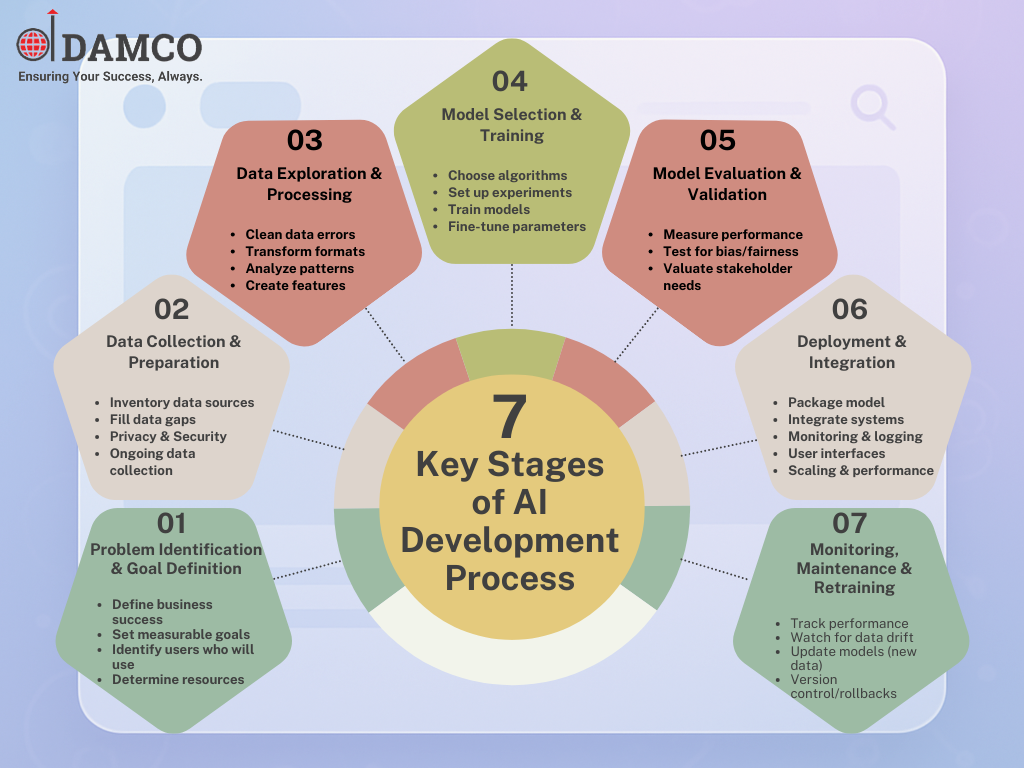
Successful AI integration relies on a structured AI development process, an iterative, seven-stage journey that bridges the gap between technical complexity and business value. This AI development process begins with rigorous problem identification and data acquisition, followed by the most time-intensive phase: data preprocessing, which can consume up to 80% of project resources. Once data is refined, the AI development process moves through model training and validation, ensuring the system meets specific performance benchmarks before deployment into production environments. Ultimately, a sustainable AI development process concludes and continues with ongoing monitoring and retraining to combat data drift, ensuring the AI remains a high-value asset rather than a degrading one.
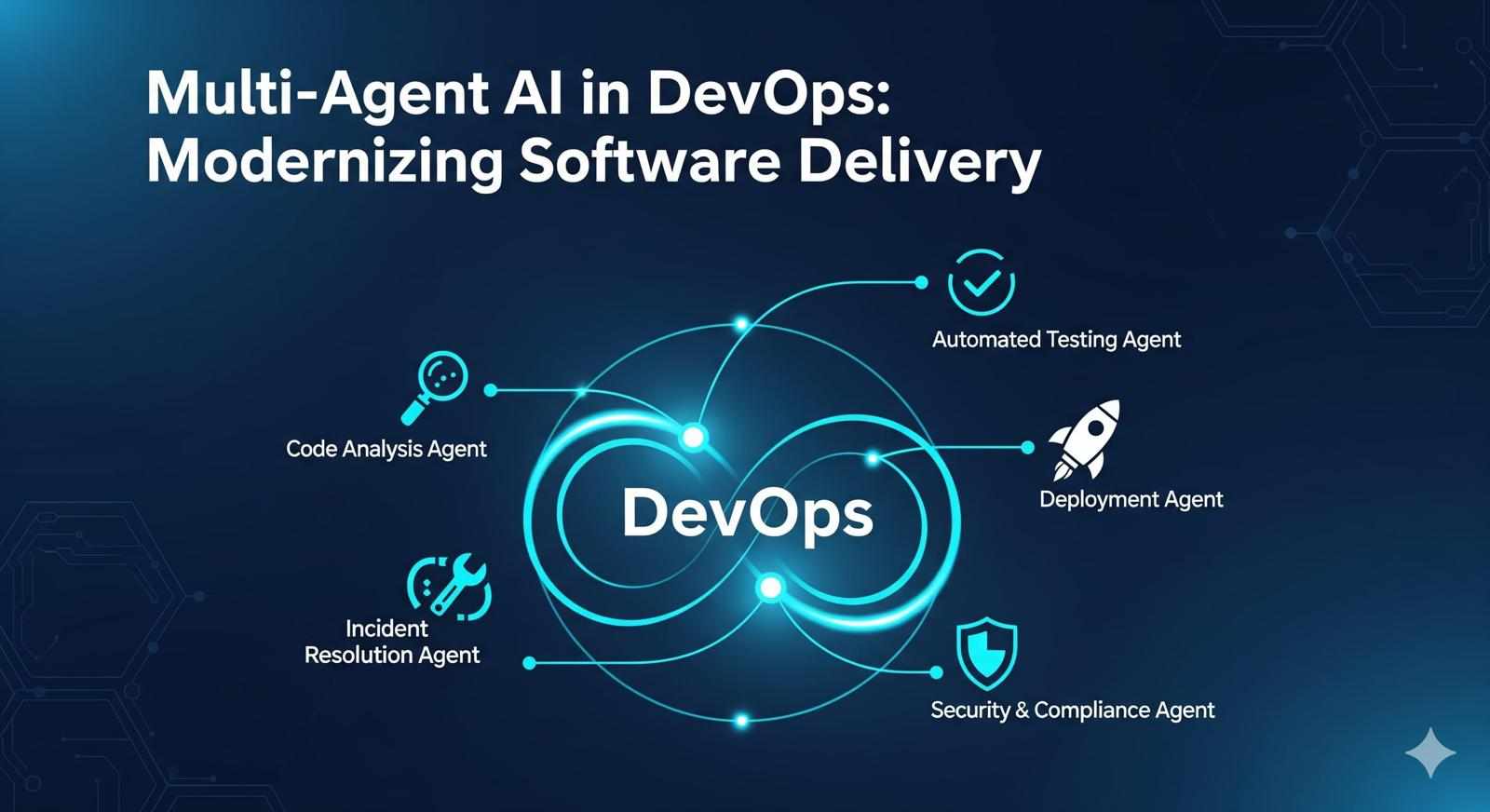
The evolution from traditional automation to Agentic AI is here. While single AI tools have helped speed up coding, the real game-changer is Multi-Agent AI Frameworks - a system where specialized AI agents collaborate in real-time to manage the entire software delivery lifecycle.
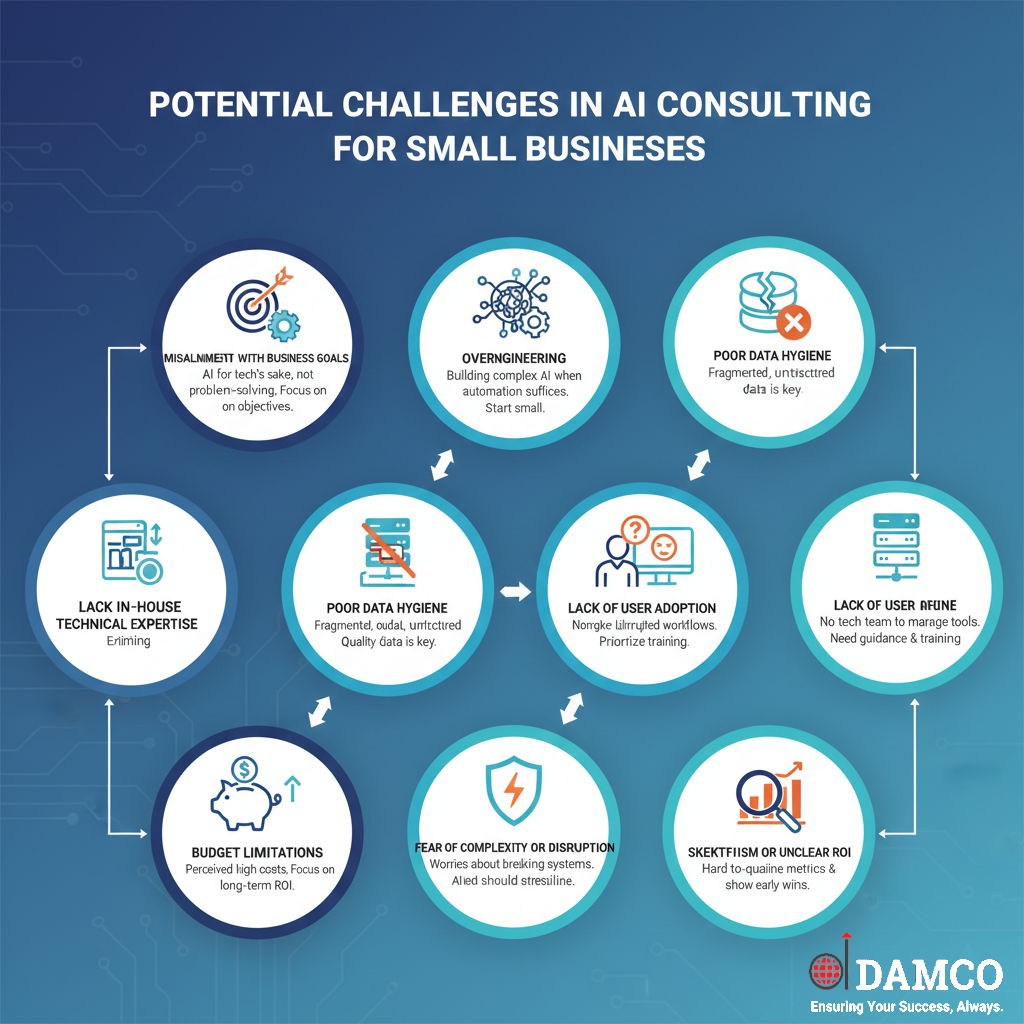
For small to medium-sized enterprises (SMEs), integrating artificial intelligence can feel like a daunting leap into the unknown. This infographic identifies the eight primary obstacles - from poor data hygiene and budget constraints to the fear of organizational disruption - that often stand in the way of successful implementation. By leveraging professional AI consulting services, businesses can avoid the traps of overengineering and goal misalignment.
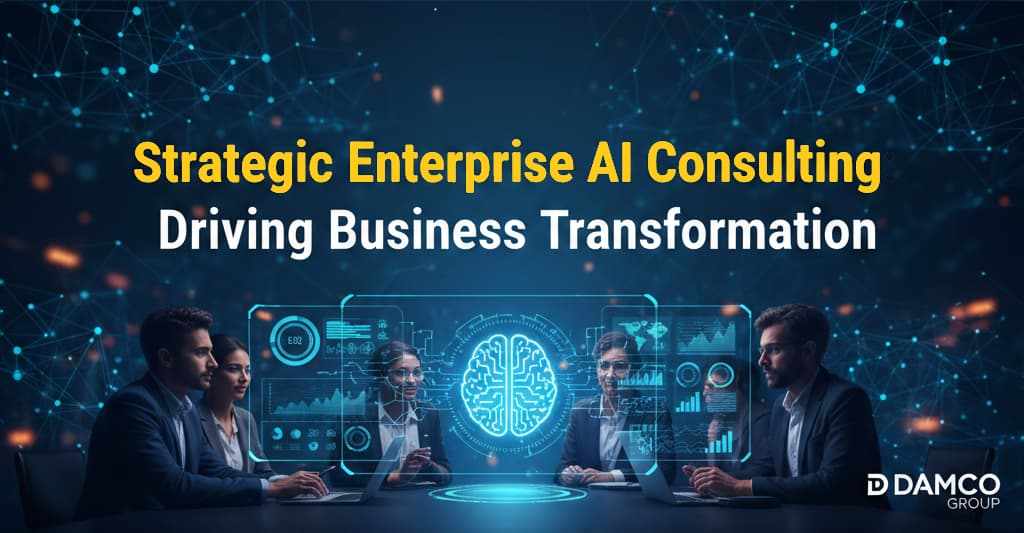
Damco Group offers comprehensive enterprise AI consulting services designed to guide organizations through the complexities of digital transformation. Their holistic approach begins with strategic use case discovery and data readiness assessments, ensuring that businesses have a solid foundation before deployment. By developing tailored AI roadmaps, Damco helps clients move from initial conceptualization to full-scale implementation of machine learning models and automated workflows. The focus remains on delivering tangible business value and measurable ROI by streamlining operations and enhancing decision-making capabilities across various industries. With deep technical expertise and a commitment to end-to-end support, Damco serves as a practical partner for navigating the evolving AI landscape. Engaging their team allows companies to leverage specialized knowledge to build scalable, future-ready solutions that align with specific corporate objectives while minimizing the risks associated with AI adoption and integration into existing legacy systems.

Artificial Intelligence (AI) is reshaping education by making learning more personalized, interactive, and accessible for students everywhere. Instead of one-size-fits-all lessons, AI tools can tailor content to each student’s pace, give instant feedback, and even offer 24/7 tutoring support. For teachers, AI takes over repetitive tasks like grading and scheduling, so they can spend more time focusing on teaching. It also helps identify where students struggle, suggests career paths, and builds essential skills like critical thinking and digital literacy.
At Damco Group, we don't just implement AI—we build strategies that deliver measurable results. From AI roadmaps to ML model deployment, our consulting services help enterprises move from experimentation to real-world impact.

With 45% of U.S. tech leaders reporting AI code reliability issues, this piece addresses the growing dilemma facing CTOs: how to harness AI's potential to accelerate software development while maintaining trust and quality. The content presents a practical three-phased roadmap for incremental AI adoption, from identifying bottlenecks to piloting tools and scaling integration. It highlights real-world success stories, including how one healthtech provider reduced delivery timelines from 2 weeks to just 6 days using AI-native frameworks. The piece emphasizes that AI adoption isn't plug-and-play—it requires structured implementation, team training, and proper governance to transform traditional SDLC processes responsibly.

Did you know? The integration of AI in accounting can help organizations streamline routine tasks such as data entry, invoice processing, and reconciliation, enabling accounting professionals to focus on more strategic tasks. Besides this, AI algorithms analyze large volumes of datasets and identify hidden patterns and insights for strategic decision-making.

From detecting diseases early to reducing administrative burden, AI is transforming healthcare by enhancing human expertise, not eliminating it. The future of medicine is collaborative, where technology amplifies clinical judgment for better patient outcomes.